PT SCM Inaugurates 60-Km MHR, Strengthening Nickel Haulage Infrastructure Between Konawe and Morowal...
17 Sep 2026, 09:11 AM 437

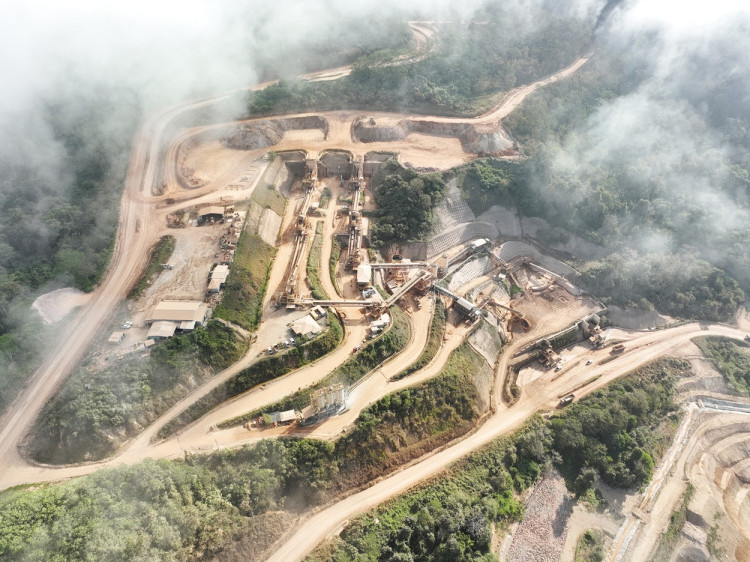
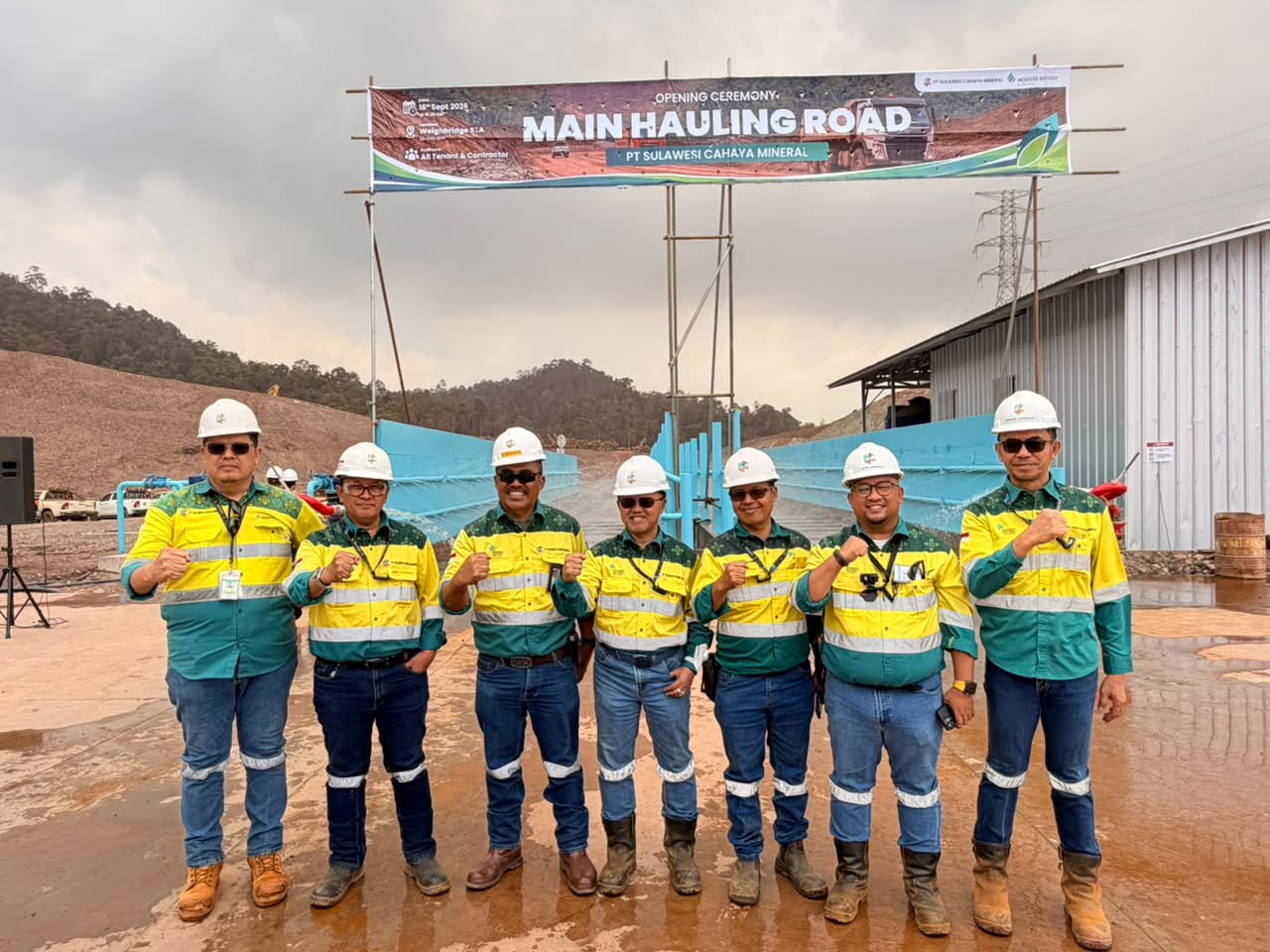
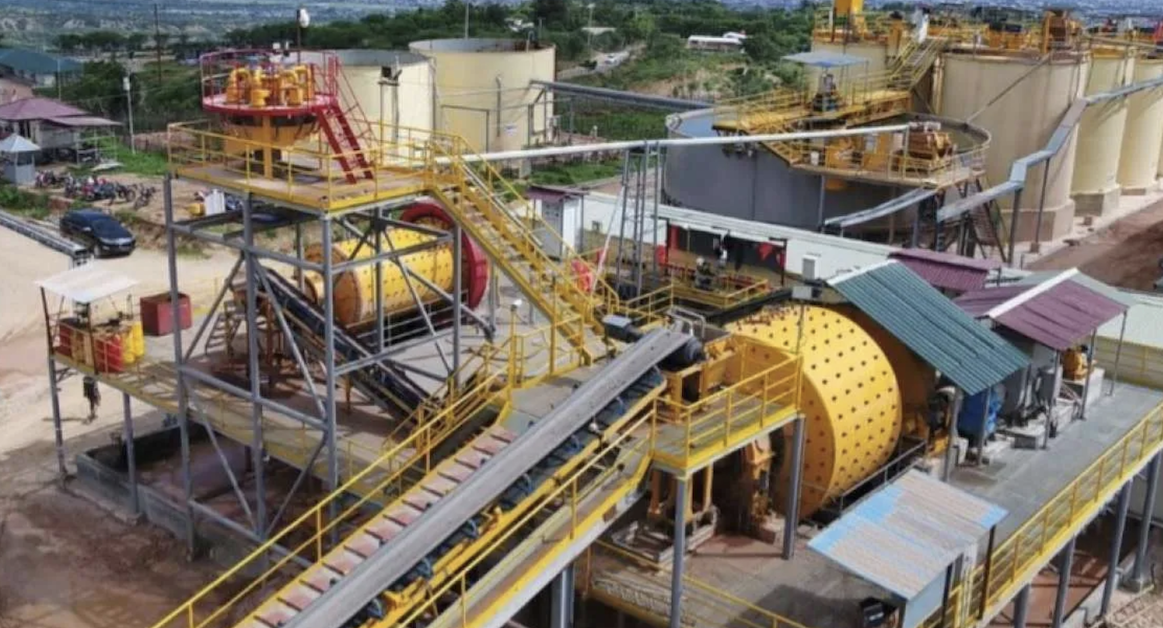
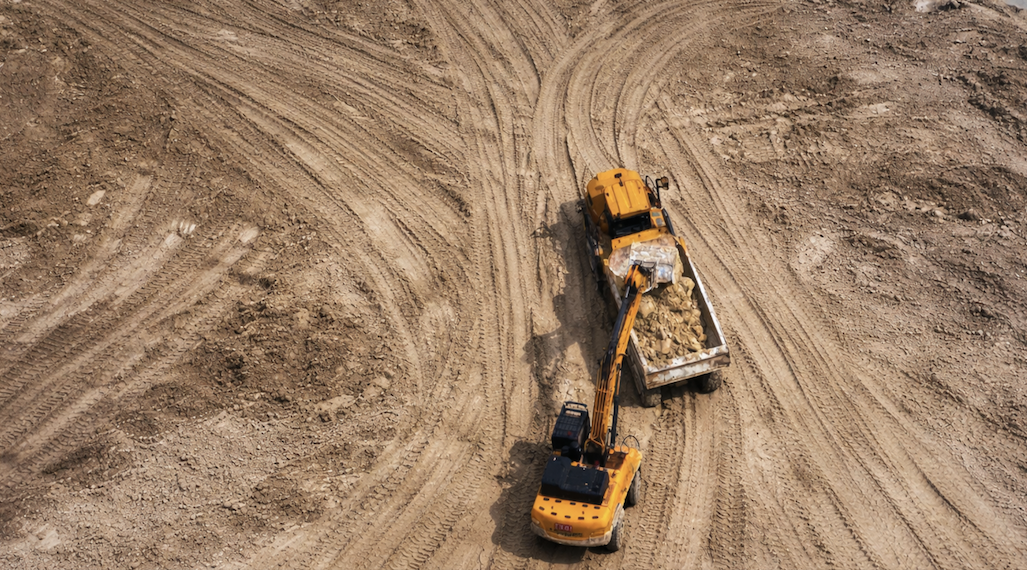
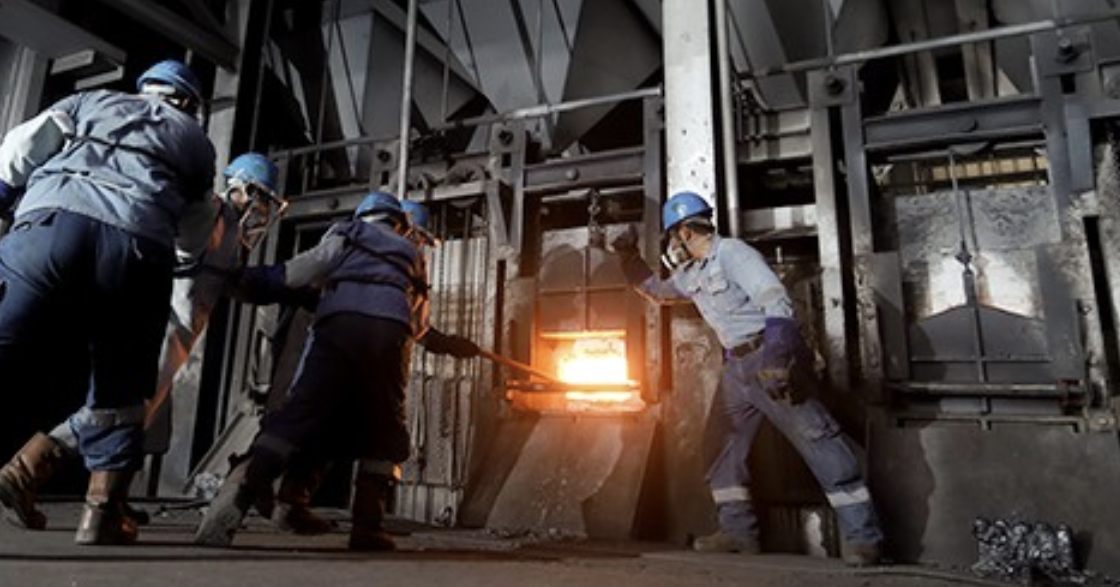
PT Sulawesi Cahaya Mineral (SCM) officially inaugurated the opening of a 60-kilometer Main Hauling Road (MHR) connecting the company's mining area in Konawe with nickel processing facilities in Morowali on Wednesday (16/9/2026).The inauguration of the main hauling route marks an important milestone in strengthening PT SCM's operational infrastructure. The MHR is specifically designed as a hauling route for heavy vehicles and trucks transporting mining materials, allowing transportation activities to be carried out along a route specifically prepared for the company's operational needs.The MHR was technically designed to support the movement of heavy vehicles carrying loads of up to hundreds of tons. The route enables the transportation of materials from the mining area to the processing facilities to be carried out in a more controlled manner, without relying on public roads.PT Sulawesi Cahaya Mineral Head of Mining Engineering, Didik Fotunadi, said the inauguration of the MHR marked a historic milestone for the company, as the route will play an important role in supporting mining operations.“Every day, units will travel along this MHR route. We will transport ore from SCM to Morowali. Therefore, there are production targets that we must achieve. However, we must all remember that safety is the top priority,” Didik said during the opening of the MHR.He stressed that production targets must not come at the expense of workplace safety. According to him, no mining material is more valuable than the safety and lives of workers.Therefore, all workers using the MHR are required to carry out hauling activities in a disciplined manner and comply with all applicable safety requirements, including maintaining vehicle speeds and safe distances between vehicles.“We can still pursue our targets. We can also increase production. But if one life is lost, no one can bring it back,” he said.Built in Two StagesPT SCM said the MHR has a total length of approximately 60 kilometers, connecting a stockpile in Konawe with a smelter facility in Morowali.The hauling route was built in two stages. The first stage, covering 20 kilometers, was constructed from 2021 to 2023. The second stage began in late 2023 and was completed in September 2026.With the completion of the MHR, PT SCM now has its own hauling route that integrates the material transportation process end-to-end through the company's road network.The infrastructure is expected to strengthen control over hauling operations while supporting improvements in the safety, efficiency and reliability of material transportation from the mining area to the processing facilities.The inauguration of the MHR also marks PT SCM's readiness to strengthen its internal logistics system to support the continuity of more integrated nickel mining and processing operations.

BRMS Completes Underground Mine Portal, Boosts Gold Production Through 2028
16 Sep 2026, 09:08 AM 585

PT Bumi Resources Minerals Tbk (BRMS) reported progress in the construction of its underground gold mining project in Poboya, Palu, Central Sulawesi. The company said the portal, or entrance to the underground mine, has been completed.BRMS President Director & Chief Executive Officer Agus Projosasmito said the underground tunnel has reached a length of more than 975 meters from the portal, at a depth of 140 meters below ground level.In addition, the first air ventilation shaft facility has been completed, while the second shaft is still under construction and is targeted for completion in the first half of 2027.With this progress, BRMS subsidiary PT Citra Palu Minerals (CPM) is projected to begin mining high-grade ore with gold grades above 3.2 grams per ton from the underground mine by mid-2027. Meanwhile, the expansion of the gold processing plant's capacity from 500 tons to 2,000 tons of ore per day is targeted for completion in early 2027.Furthermore, the new gold plant with a capacity of 2,000 tons per day, along with high-grade ore mining from the underground gold mine, will allow the company to continue increasing gold production in 2027 and 2028.In addition to the gold project in Palu, BRMS also reported progress in copper exploration activities in Gorontalo, Sulawesi. BRMS subsidiary PT Gorontalo Minerals (GM) currently operates four exploration drilling rigs at the Cabang Kiri East mining site.Next year, GM plans to operate seven drilling rigs at three mining sites in Gorontalo. The company is targeting the drilling results to be converted into copper mineral resources in the first half of 2027."We are quite satisfied with our operational progress. Regardless of macroeconomic and external factors that may affect gold prices and demand in the domestic market, we remain confident in BRMS' strong fundamentals. The pushback operation in Poboya, Palu, was successfully completed in July. Therefore, gold production from our open-pit mine is expected to increase in the second half of 2026," Agoes said in a statement on Wednesday (16/9/2026).As of trading on Wednesday (16/9/2026), BRMS shares were priced at 730 per share, down 0.68% from the previous session. On a year-to-date basis, the share price has also declined 33.64%.

PTFI Targets Gresik Smelter to Produce 5 Million Pounds of Copper Cathodes This Month
15 Sep 2026, 09:10 AM 573

President Director of PT Freeport Indonesia Tony Wenas is targeting the copper cathode smelter in the Java Integrated Industrial and Port Estate (JIIPE) industrial area in Manyar, Gresik, East Java, to begin producing 5 million pounds of copper cathodes in September 2026.“Feeding into the new Freeport Indonesia smelter began last August, and production is expected to begin this September, with around 5 million pounds of copper cathodes,” Tony said during a working meeting with Commission XII at the Parliament Complex in Senayan, Jakarta, on Tuesday.Tony said the Freeport Indonesia smelter in Manyar had temporarily halted operations due to insufficient concentrate supplies from Freeport's mining operations. The disruption was caused by a landslide at the Grasberg Block Cave (GBC) underground mine on September 8, 2025.As a result of the incident, Tony said, Freeport Indonesia's concentrate was only sufficient to supply PT Smelting. PT Smelting is Freeport Indonesia's first smelter and also Indonesia's first copper smelter.Meanwhile, the Freeport Indonesia Smelter, also known as the Manyar Smelter, is Freeport Indonesia's second smelter.“Then, if we look at October 2026, 35 million pounds is the copper cathode production from the new smelter (Freeport Indonesia Smelter),” Tony said.According to his presentation, copper cathode production at the Freeport Indonesia Smelter is expected to increase from 35 million pounds in October 2026 to 55 million pounds in November, before rising to 57 million pounds in December 2026.In the first quarter of 2027, cathode production at the Freeport Indonesia Smelter is projected to reach 137 million pounds, rising to 145 million pounds in the second quarter of 2027.“So, the total for 2026, as I mentioned earlier, is 800 million pounds of copper that will be produced from the two smelters, namely 600 million pounds from PT Smelting and 200 million pounds of copper from the PTFI smelter,” Tony said.Freeport Indonesia is targeting its production capacity, following the landslide at the Grasberg Block Cave (GBC) underground mine on September 8, 2025, to fully recover to 100% by 2028.Tony explained that in the first half of 2026, GBC mine production capacity following the landslide was around 50% of normal capacity. Production capacity is then expected to increase to 65% in the second half of 2026.Furthermore, production capacity is targeted to begin recovering to 75% in the first half of 2027, before reaching 100% throughout the second half of the year.

Indika Energy Accelerates Awak Mas Gold Mine, Construction Progress Reaches 60.63%
14 Sep 2026, 09:13 AM 432

PT Indika Energy Tbk. (INDY) is accelerating the development of the Awak Mas gold mining project in South Sulawesi. As of the end of June 2026, the project's construction progress had reached 60.63%.Indika Energy is targeting the Awak Mas gold mine to produce its first gold, or first gold, in the second quarter of 2027.Indika Energy Senior Vice President and Head of CEO Office, Corporate Communications, and Sustainability Ricky Fernando said the Awak Mas project is currently still under construction.“As of June 30, 2026, the project's construction progress had reached 60.63% toward the construction completion target,” he told Bisnis, as quoted on Monday (14/9/2026).Once construction is completed, the project will enter the stage toward operational readiness before moving into the commercial production phase.The company is targeting first gold in the second quarter of 2027. In its first year of production, Awak Mas is expected to produce around 50,000–70,000 ounces of gold.With this target, Awak Mas is expected to begin contributing to Indika Energy's financial performance by the end of the second quarter of 2027, in line with the start of gold production.INDY's New Growth EngineThe development of Awak Mas is part of INDY's strategy to increase the contribution of its non-coal businesses.The company sees the gold project as having the potential to become one of its new sources of growth once fully operational.“Once fully operational, we expect this project to become one of the main contributors to our non-coal business line, both in terms of revenue and EBITDA,” Ricky said.Thus, the success of the Awak Mas project will be one of the key factors in INDY's portfolio diversification. The company is not only pursuing growth from its energy and coal businesses, but is also building exposure to gold, a commodity with different characteristics.Based on the consolidated financial statements for the six months ended June 30, 2026, INDY posted revenue of USD 1.15 billion, up 19.9% from USD 956.8 million in the same period last year.In line with the increase in revenue, profit attributable to owners of the parent entity surged to USD 10.2 million, significantly higher than USD 2.2 million in the first half of 2025.The improved performance was supported by larger contributions from several business units, namely Kideco Jaya Agung (Kideco), Tripatra, Interport Mandiri Utama (Interport), and Indika Indonesia Resources.

Arsari Group Partners With Asahi to Advance Tin Downstreaming in Bangka Belitung
13 Sep 2026, 08:57 AM 453

PT Arsari Tambang is promoting tin downstreaming in Bangka Belitung through a strategic partnership with Singapore Asahi Chemical & Solder Industries Pte. Ltd. (Asahi Solder). The partnership is aimed at developing value-added solder products, strengthening technology and quality, and expanding market access for Indonesia's downstream tin products.The partnership is expected to further strengthen the tin supply chain in Bangka Belitung by increasing demand for raw materials. The move could drive production and absorption of tin ingots from Bangka for downstream industrial needs.PT Arsari Tambang President Director and Arsari Group Deputy President Director Aryo P. S. Djojohadikusumo said the partnership was part of efforts to build an integrated tin downstreaming ecosystem, spanning mining and processing to the production of value-added products that can enter global industrial supply chains. He emphasized that downstream industry development should deliver greater benefits to tin-producing regions.“We want to see Bangka Belitung's tin move beyond being a commodity and continue moving up the value chain. By strengthening downstream industries, more value can be created in Indonesia, while also increasing demand for and absorption of tin ingots from Bangka,” he said in an official statement, as quoted on Sunday (September 13, 2026).Aryo said the partnership was also part of Arsari Group's vision to build an industrial ecosystem for Indonesia's future that connects natural resources, value-added materials, manufacturing and technology.Arsari Group is currently developing a technology and artificial intelligence ecosystem through RAIA Grid, which it is building together with Indosat. The ecosystem includes connectivity infrastructure, fiber-optic networks, data centers, cloud computing, high-performance computing and artificial intelligence. Arsari Group is also preparing GPU assembly capabilities in Indonesia.“The technology ecosystem of the future requires a strong industrial supply chain. Therefore, we see the development of tin downstreaming, manufacturing and technology as interconnected components,” Aryo said.Meanwhile, Singapore Asahi Chemical & Solder Industries Pte. Ltd. President Director Vincent Kho welcomed the partnership. He said Indonesia had significant potential to develop its downstream tin industry.“We welcome the establishment of this strategic partnership with Arsari Tambang. Indonesia has significant potential to develop its downstream tin industry, and we believe that combining manufacturing capabilities in Indonesia with Asahi Solder's experience in solder products and electronic interconnection materials can create new opportunities to produce higher value-added products and strengthen Indonesia's role in the global electronics industry supply chain,” he said.

Coal, Nickel and Other Mining Royalties Reach IDR 108 Trillion Through August 2026
11 Sep 2026, 11:57 AM 657

The Ministry of Energy and Mineral Resources (ESDM) said non-tax state revenue (PNBP) from the mineral and coal (minerba) subsector reached IDR 108 trillion as of August 31, 2026. The figure was up IDR 21 trillion from IDR 87 trillion as of August 31, 2025.ESDM Mineral and Coal Director General Tri Winarno said the increase was supported by contributions from coal and nickel. He said state revenue continued to grow amid the government's efforts to manage production volumes through adjustments to the Work Plan and Budget (RKAB).“In 2025, PNBP from the mineral and coal subsector reached IDR 135.16 trillion. Now, in our presentation, the figure was IDR 92 trillion through July, but if we take the data through August, as of August 31, the figure had reached IDR 108 trillion,” he said at an event organized by the Indonesian Mining Experts Association (Perhapi) at JIExpo, as quoted on Friday (September 11, 2026).In detail, the coal sector contributed Rp66 trillion in PNBP as of August 31, 2026, up from IDR 59 trillion as of August 31, 2025. The increase in coal revenue was achieved despite a decline of 8 million tons in average monthly production.“So, in terms of production, our monthly production fell by 8 million (tons), but in terms of PNBP, it increased by Rp7 trillion. This means that each year we see an increase of IDR 1 trillion with production falling by 8 million tons,” he said.Meanwhile, PNBP from the nickel sector rose to Rp21 trillion as of August 31, 2026, compared with IDR 10 trillion as of August 31, 2025. The increase in state revenue was also accompanied by a decline in nickel production of around 13 million tons of ore.“For nickel, as of August 31, 2026, our PNBP was IDR 21 trillion. Meanwhile, as of August 31, 2025, our PNBP was IDR 10 trillion. What about production? Production fell by around 13 million tons of ore,” he said.The government said the increase in PNBP amid lower production volumes demonstrated the effectiveness of RKAB management in the mineral and coal sector. The policy is intended to ensure that natural resource utilization delivers optimal returns for the state without requiring excessive production.“So, if we look at it, with good management and by not going all out on production, it turns out this will have a positive impact on the state and all of us,” he said.

Bauxite Output Reaches 17.76 Million Tons, West Kalimantan Becomes Hub for National Alumina and Alum...
11 Sep 2026, 08:52 AM 811

Indonesia's bauxite production reached 17.76 million tons as of September 1, 2026. The figure makes the commodity, which is heavily mined in West Kalimantan, an important part of the national mineral downstreaming agenda.The Ministry of Energy and Mineral Resources (ESDM) emphasized that the management of bauxite and other mining commodities is no longer focused solely on production volumes. The government wants mineral ores to be processed into value-added products before entering the industrial supply chain.“The focus is not only on how much we produce, but on how much added value we obtain or create from the mining industry,” ESDM Mineral and Coal Director General Tri Winarno said.He presented the data at an event held by the Indonesian Mining Experts Association in Jakarta on Thursday (Sept. 10), as reported by ANTARA.West Kalimantan Becomes a Key LinkWest Kalimantan holds an important position in bauxite downstreaming as it has both raw material resources and processing facilities in Mempawah.Phase I of the Smelter Grade Alumina Refinery (SGAR) in Mempawah has an annual alumina production capacity of one million tons. To reach that capacity, the facility requires around 3.3 million tons of washed bauxite each year.Alumina is a processed product of bauxite that is subsequently used as a raw material for aluminum production. The presence of the SGAR means minerals from West Kalimantan are not limited to being mining ore.Bauxite supplies for the facility come from the mining areas of PT Aneka Tambang Tbk in Mempawah and Landak regencies. The plant is operated by PT Borneo Alumina Indonesia, a joint venture between PT Indonesia Asahan Aluminium and Antam.Alumina Capacity to DoubleThe development of SGAR Phase II is designed to add one million tons to annual alumina production capacity. If both phases operate at their respective capacities, domestic alumina production from Mempawah could reach two million tons per year.The facility is projected to consume around six million tons of bauxite ore annually. All raw materials are planned to come from Antam's mining concession areas in Mempawah and Landak.An aluminum smelter with a capacity of 600,000 tons per year will also be built in the same area. Its production will be prioritized to meet domestic industrial demand.Combined with Inalum's facility in Kuala Tanjung, North Sumatra, the company's aluminum production capacity is projected to reach around 900,000 tons per year.The development of integrated bauxite, alumina and aluminum facilities in Mempawah requires an investment of around IDR 104.55 trillion, equivalent to USD 6.23 billion. The project is estimated to have the potential to increase state revenue by up to IDR 6.6 trillion per year, according to calculations by Inalum.Mineral and Coal Non-Tax Revenue Rises by IDR 21 TrillionIncreasing the value added of mining commodities has become increasingly important as state revenue from the mineral and coal subsector continues to rise.The Ministry of Energy and Mineral Resources (ESDM) recorded mineral and coal non-tax state revenue (PNBP) of IDR 108 trillion as of August 31, 2026. The figure was up IDR 21 trillion, or around 24%, from IDR 87 trillion in the same period last year.Coal remained the largest contributor. The commodity generated IDR 66 trillion in PNBP, up from IDR 59 trillion in the same period in 2025.Nickel PNBP also increased from IDR 10 trillion to IDR 21 trillion. However, ESDM has yet to provide a breakdown of the specific contribution of bauxite to total mineral and coal PNBP.Production Does Not Have to Be IncreasedThe increase in PNBP came as average coal production was actually lower. Throughout 2025, coal production reached 817.48 million tons, or an average of 68.1 million tons per month.As of July 2026, production stood at 423.71 million tons, averaging around 60.5 million tons per month.According to Tri, the figures show that increasing state revenue does not always have to be achieved by increasing production. Commodity prices, market demand, domestic requirements, logistics and reserve sustainability must also be taken into account.“Our approach is optimum production, where production must be balanced with the market, market demand, the domestic market obligation (DMO), price conditions, logistics and reserve sustainability,” he said.Downstreaming Challenges in West KalimantanNational bauxite production of 17.76 million tons provides supplies for the processing industry. However, high production does not automatically translate into maximum benefits for producing regions.The benefits for West Kalimantan depend on the ability of downstreaming projects to absorb local workers, involve regional businesses, protect the environment, and generate revenue that is felt by communities around the mines and plants.The industrial chain in Mempawah is designed to connect bauxite, alumina and aluminum within a single area. If it proceeds according to plan, West Kalimantan will no longer merely be a supplier of raw materials, but will become one of the country's aluminum industry hubs.Amid the scale of the investment, environmental monitoring and mine-site rehabilitation must continue. The added value of bauxite should not be measured solely by the amount of alumina and aluminum produced, but also by the economic benefits and environmental footprint left in West Kalimantan.
Eramet Resumes Operations at Weda Bay Nickel Mine in Indonesia
11 Sep 2026, 08:44 AM 749

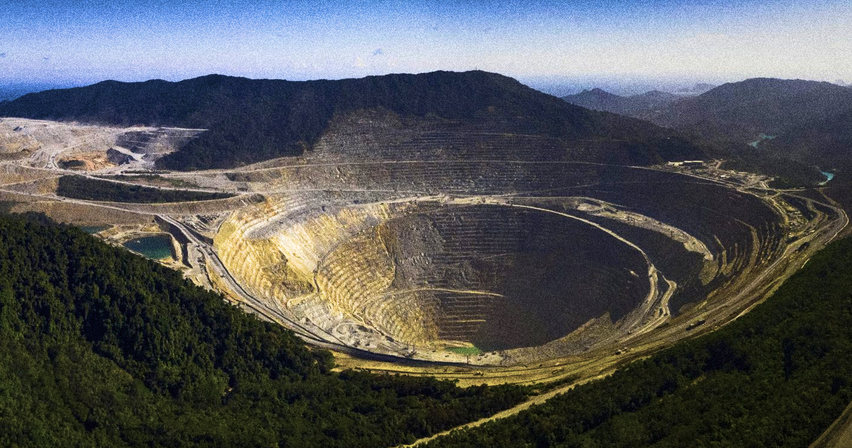
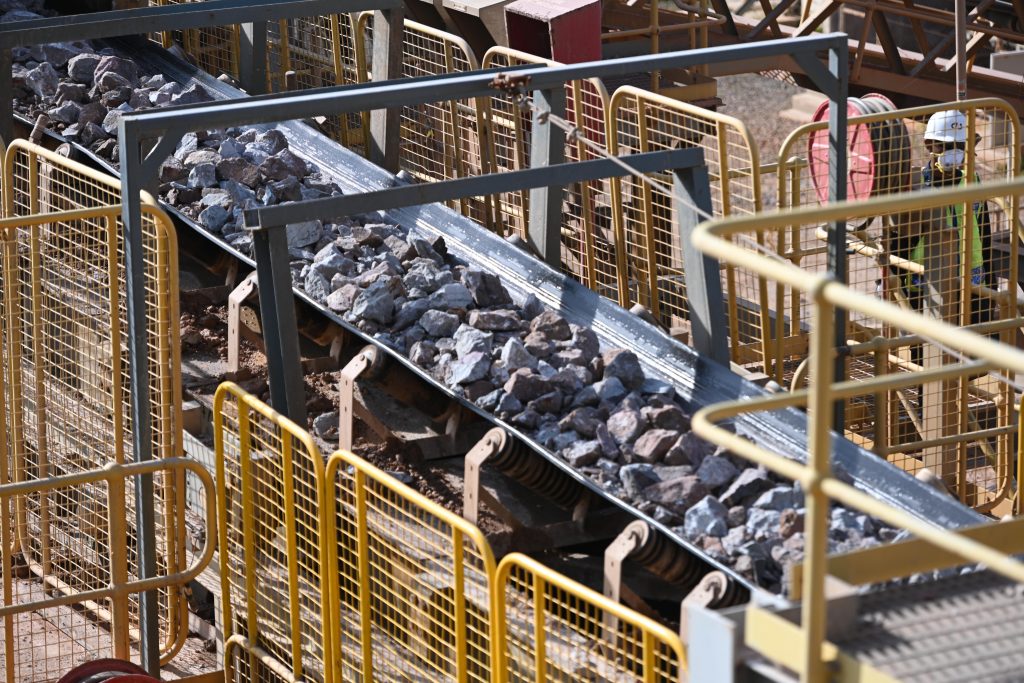
Eramet has resumed operations at the Weda Bay nickel mine in Indonesia after halting production in May 2026 due to the exhaustion of its production quota.The French mining company said operations at Weda Bay Nickel (WBN) have gradually resumed after receiving authorization from the Indonesian government.“Mining operations at Weda Bay Nickel (WBN) have gradually resumed with permission from the Indonesian authorities,” Eramet said in a statement, as quoted by MiningWeekly.Eramet has not explained whether WBN has received an additional production quota. A company spokesperson also declined to provide further details regarding the authorization.The company said it would update its 2026 external sales guidance for nickel ore in due course. WBN is also continuing discussions with the Indonesian government regarding mine operations.Previously, Weda Bay, one of the world's largest nickel mines, halted operations and entered a care and maintenance phase in May 2026 after its initial production quota of 12 million wet metric tons (WMT) for the year was exhausted.The quota was significantly lower than the initial 2025 allocation of 32 million WMT.Indonesia, the world's largest nickel producer, cut mining permit volumes this year as part of efforts to tighten controls over commodity production, exports and prices.Uncertainty over mining permits in Indonesia has also weighed on Eramet's financial performance. The company is now preparing a capital increase and the sale of several stakes in a number of business lines.Eramet owns WBN together with Chinese steel group Tsingshan and PT Aneka Tambang Tbk (ANTM).

Vale Indonesia (INCO) Targets Full Production at Pomalaa HPAL Project in 2027
10 Sep 2026, 08:49 AM 807

PT Vale Indonesia Tbk. (INCO)'s High-Pressure Acid Leach (HPAL) smelter project in Pomalaa, Southeast Sulawesi, is expected to begin full operations in 2027. The smelter will have a production capacity of up to 120,000 tons of mixed hydroxide precipitate (MHP).Vale Indonesia Director Muhammad Asril said that on September 15, 2026, Vale would begin trials of the smelter. All end-to-end processes at the Pomalaa HPAL facility will subsequently be tested.Vale had initially targeted mechanical completion of the HPAL project for December 2026. However, progress to date has allowed the company to bring forward the project's completion schedule.“We can bring it forward by around 2–3 months, allowing us to achieve mechanical completion in September or October, so we can ramp up over approximately 3–6 months. In 2027, we can begin full ramp-up and reach full production of 120,000 tons of MHP at Pomalaa,” he said at the Public Expose Live 2026 on Thursday (September 10, 2026).For context, IGP Pomalaa is a mining and HPAL processing plant project with an investment value of US$4.5 billion. In developing the project, Vale has partnered with Chinese EV battery producer Zhejiang Huayou Cobalt Co., Ltd. and US automaker Ford Motor Co.The IGP Pomalaa project comprises a nickel ore mining project and a High-Pressure Acid Leach (HPAL) processing project. The project's estimated annual output will reach 120,000 tons of nickel and around 15,000 tons of cobalt contained in MHP products.“On the mining side, we have actually already started mining. The mining service company is already onsite. We are currently producing saprolite and limonite for HPAL requirements,” he said.Vale said development of the IGP Pomalaa mine had reached 83%, while progress on the HPAL facility had reached 86%. Nevertheless, mineral ore sales have already begun, with the first ore sale carried out on February 28, 2026.Vale has set a target of producing 300,000 tons of limonite per month, or around 9,677 tons per day.Previously, Vale had targeted total nickel matte production of 67,645 metric tons throughout 2026. Management set the target with optimism following the completion of the Furnace III rebuild project and an improvement in the nickel grade of the ore mined by the company.Vale Indonesia Deputy President Director Abu Ashar said the company's production in the first half of 2026 had been relatively stable. The nickel grade from mining operations was also considered the highest in the past three years.“The repair work has been completed, the nickel grade from mining to the plant is quite good, and plant operations have also been relatively stable, so we are optimistic about achieving our annual production target of 67,645 tons this year,” he said at the Public Expose Live 2026 on Thursday (September 10, 2026).

PT Timah Targets 30,000-Ton Increase in Reserves in 2026
10 Sep 2026, 08:45 AM 540

PT Timah (Persero) Tbk is targeting an additional 30,000 tons of tin reserves in 2026 to replace depletion, or the reduction in reserves resulting from production activities, while maintaining the sustainability of the company's operations.PT Timah Corporate Strategy and Business Development Director Harry Budi Sidharta said increasing resources and reserves was one of the company's focuses in its strategy to boost operations and production.“With a target of adding 30,000 tons in reserves, at least that would replace or correspond to the results of depletion. This is to maintain the sustainability of the company's production,” Harry said during the online Public Expose Live 2026 in Jakarta on Thursday.As of the first half of 2026, PT Timah recorded 798,000 tons of tin mineral resources and 312,000 tons of tin mineral reserves, both measured in Sn.To strengthen these resources and reserves, the company is carrying out exploration activities both on land and at sea.According to the company's presentation, activities carried out in 2026 included geological surveys covering 3,216 hectares, geophysical surveys spanning 76 kilometers, and topographical surveys covering 17,638 hectares.The company also recorded 41,104 meters of exploration drilling and 12,971 meters of infill drilling as part of its strategy to increase resources and reserves.PT Timah Production and Commercial Director Ilhamsyah Mahendra said exploration was a priority in 2026 as it represents the initial stage in discovering new resources and reserves.“For the mining business, it starts with exploration activities, which are currently a priority in 2026. This is then followed by the actual mining process for tin minerals,” Ilhamsyah said.In addition to exploration, the company has begun focusing on processing primary tin and optimizing production through the addition of equipment, improvements in equipment productivity, and the acceleration of new mine-site development.Since July and August 2026, PT Timah has added four production suction dredgers to support its operational targets through the end of the year. Additional equipment has also been deployed in several onshore mining areas.“We hope to maximize the addition of equipment and increase the productivity of our mining equipment through the end of the year,” Ilhamsyah said.Separately from its reserve-addition target, the company's 2026 Work Plan and Budget (RKAP) sets a target of producing 30,000 tons of tin ore, measured in Sn.In the first half of 2026, the company's tin ore production reached 12,232 tons of Sn, up 75% from the same period a year earlier. Tin metal production reached 10,865 metric tons, representing annual growth of 58%.Ilhamsyah said the company remains on track to meet its operational and production targets for this year after making a number of improvements to its operational fundamentals and processing and refining infrastructure.For 2027, he said the company's operational and production targets would be more or less the same as those for 2026. However, the focus will remain on increasing resources and reserves to maintain the sustainability of its operations and business.In addition to primary tin, the company is also developing the potential of rare earth metals from tin-associated minerals, including monazite. The development remains at the technology assessment stage in collaboration with several partners.

Advertisement


Get Your Pass