Merdeka Copper Gold (MDKA) Disburses US$ 25 million for Subsidiaries
13 Apr 2022, 11:24 AM 5588

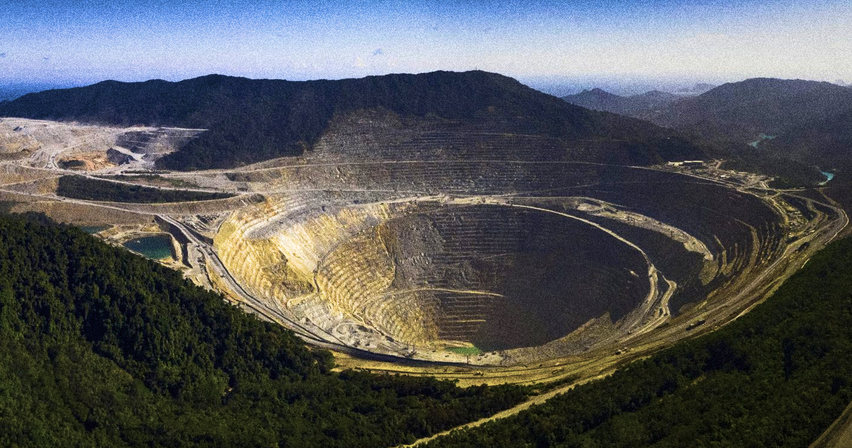
PT Merdeka Copper Gold Tbk (MDKA) disbursed funds for its subsidiary, PT Andalan Bersama Investama (ABI), amounting to US$ 25 million. The funds are in the form of a debt agreement from the parent company and will be used for expansion purposes.In a written statement, MDKA's management explained that the company and ABI had signed a loan agreement for the provision of these funds. The funds will be used by ABI for working capital, operational and other purposes as needed. "This transaction is included in the affiliate transaction because ABI is a company controlled by the company," explained management, in an official statement on the Indonesia Stock Exchange (IDX), Wednesday (13/4).As for the first quarter of 2022, Merdeka Copper Gold has disbursed Rp 149.2 billion for the exploration of the Tujuh Bukit, Wetar and Pani mining areas until the first quarter of 2022.The exploration of the Tujuh Bukit area is focused on power and gold resources. Most of the exploration costs were spent on this project, which was IDR 144.4 billion which consisted of tunnel maintenance, underground resource definition drilling, and test work related to the area.The testing method used is drilling starting from underground and surface. This test was carried out by Merdeka Copper and PT Merdeka Mining Service. The area selected for the current drilling operation is in the Tujuh Bukit porphyry deposit which is the largest area containing high grade copper and gold.Drilling was carried out in which 6 underground rigs carried out resource definition drilling with a total drilling depth of 10,105.7 meters and 2 surface rigs were completed with a total depth of 10,105.7 meters.Then, the second project is located on Wetar Island, West Maluku. In this project, MDKA disbursed funds of Rp. 31.7 billion. The test method used is by mapping and creating a trajectory to continue the surface geophysical EM survey from the results of regional EM air targets.Followed by inline drilling and resource extension and metallurgy in Partolang and Partolang Barat, initial drilling in the Partolang Bridge area to identify resources and targets in the Lerokis area determined by EM targets and prior rock sampling.The third project is located in the Pani Project, Gorontalo, West Sulawesi. MDKA is currently preparing a drilling program and constructing drill bearings and laying water pipes. Subsequently, the datasets from the PETS IUP and GSM Contract of Work were combined and a revised and simplified geological code system was developed for drill core logging.Stock ProspectPT Merdeka Copper Gold Tbk (MDKA) changed its business direction to become a diversified mineral mining company. This action will balance the company's exposure from nickel, gold and copper mining.Meanwhile, the increase in nickel and coal prices causes MDKA's cash cost to increase to US$ 14,400 in 2022. The company will acquire J&P Indonesia to work on nickel mining.“With the desire to acquire a nickel mine, MDKA will transform into a diversified mineral miner. This is a positive sentiment, especially since nickel prices have increased significantly," wrote BRI analyst Danareksa Sekuritas Hasan Barakwan. Source: https://investor.id/market-and-corporate/290533/merdeka-copper-gold-mdka-kucurkan-dana-untuk-anak-usaha-us-25-juta

Turning nickel into EV batteries: Indonesia wants to take its mining industry to the next level
13 Apr 2022, 08:19 AM 5562

Indonesia may be rich in mineral resources, but its mining sector contributes only a fraction to the country’s economy. It’s something the country is looking to change. The Southeast Asian nation boasts of natural deposits including tin, nickel, cobalt and bauxite — some of which are important raw materials for electric vehicle production.Despite large exports, the mineral and coal sector alone contributed only 5% to Indonesia’s GDP in 2019, according to the Extractive Industries Transparency Initiatives. To boost its economy, Indonesia wants to move away from exporting raw materials, to focus instead on developing its downstream industries. Downstream activities involve processing raw materials into finished products to provide added value. For instance, crude oil can be refined into petroleum, diesel and plastics. President Jokowi Widodo has said: “Indonesia always exports raw materials, while it is better to process and consume them through downstream industry or domestically.”As part of that plan, Indonesia banned the export of nickel ore in January 2020, and the government has pledged to the gradually stop exporting other raw materials too. “I think we can reap many benefits of stopping nickel ore export,” Widodo said in late 2021. “Therefore, next year, we will stop raw materials export for bauxite ore, and next, gold and tin ores.”The move downstream is expected to create jobs, increase profit margins for the sector, as well as cut down on carbon emissions.“The impact is supposed to be positive, since value-added products potentially reduce coal mining companies’ financial performance at the risk of coal price volatility,” according to William Simadiputra, analyst at DBS Group Research.Going downstream also reduces exposure to fluctuating commodity prices and the reliance on imports. Widodo has said Indonesians will eventually stand to benefit. “Subsequently, it will create jobs ... it will generate tax income for the country, and new business opportunities, for instance, domestic companies that will export nickel ore,” the president said.Climbing up the value chain Indonesia has set its sights on three key sectors for downstreaming: the mining and mineral industry, the coal and fuel industry, and the agroindustry. According to Indonesia’s Investment Coordinating Board, BKPM, the country has the largest nickel reserve in the world and possesses 21 million tons of nickel.Indonesia hopes to transform raw nickel into higher end products like lithium batteries for electric cars — a move the investment board said will eventually bring economic growth. “The Government is working on research regarding lithium-ion battery innovations and it is expected that within two to three years ahead we can produce lithium battery,” Widodo said in late 2020. Indonesia is the world’s fourth-largest coal producer, and the top thermal coal exporter globally.The Southeast Asian nation is also making a push for downstream coal projects, according to Simadiputra, who said coal mining companies receive royalties from the government when such projects succeed. Coal mining is vital for Indonesia, said Wood Mackenzie analyst Shirley Zhang. “Not only does it help ease the current global energy crisis, the country — a key exporter of thermal coal — also benefits from the high seaborne coal prices,” she told CNBC. “It also ensures energy security for the country’s domestic economic growth.”Indonesia’s coal production reached 564 million tonnes in 2020, according to the IEA. The country exported 405 million tonnes of coal in the same period — or 31.2 % of world’s coal exports that year. Thermal coal is a key driver of Indonesia’s economy, Zhang said, adding that manufacturing, the country’s biggest GDP contributor at 26%, is also driven by coal power.Cutting reliance on LPG importsIndonesia — the fourth largest LPG importer in Asia — plans to “reduce dependence on costly LPG imports which took up Rupiah 50.6 trillion ($3.6 billion) in subsidies,” according to S&P Global. For instance, Bukit Asam, an Indonesian state-owned coal miner, has initiated a $2.3 billion coal gasification project with state energy firm Pertamina and U.S. industrial gas and chemicals firm, Air Products.The project is expected to absorb 6 million tonnes of coal and produce 1.4 million tonnes of dimethyl-ether (DME), a form of renewable fuel that can be used to replace diesel and propane. This will help reduce annual LPG imports by 1 million tonnes, according to Simadiputra. “Downstream activities will help to detach Indonesia from energy imports such as LPG. We expect lower energy imports to positively impact Indonesia’s trade balance, especially amid the current trend of high energy prices,” the analyst said.The Southeast Asian country also stands to benefit from the overall trend of clean and renewable energy too, said Zhang from Wood Mackenzie. In fact, Indonesia has the potential to become a leader in decarbonizing.Source: https://www.cnbc.com/2022/04/14/indonesia-wants-to-stop-exporting-minerals-make-value-added-products.html

PT United Tractors, Tbk Will Distribute 2021 Cash Dividend of IDR 4.6 Trillion
12 Apr 2022, 09:12 AM 4714

The company known as the largest heavy equipment distributor in Indonesia, PT United Tractors, Tbk (UT) again held the Annual General Meeting of Shareholders (AGMS) on Friday (08/4). The meeting, which was held at the Catur Dharma Hall, Menara Astra, Jakarta, decided several things.First ; approve and accept the Company's Annual Report for the 2021 Fiscal Year including ratifying the Supervisory Report of the Company's Board of Commissioners. Then ratify the Consolidated Financial Statements of the Company and its Subsidiaries for the 2021 Fiscal Year which has been audited by the Public Accounting Firm of Tanudiredja, Wibisana, Rintis & Partners as stated in its report dated February 21, 2022 with a fair opinion in all material respects.Second , to approve the use of the Company's consolidated net profit which reached Rp10.3 trillion. The details of the dividend are cash dividends of Rp1,240 per share or a total of Rp4.6 trillion. This includes an interim dividend of IDR 335 per share or a total of IDR 1.2 trillion which was paid on October 22, 2021. So the remaining IDR 905 per share or a total of IDR 3.4 trillion will be distributed to the Shareholders of the Company whose names are recorded in the Register of Shareholders. Shares of the Company on April 21, 2022 at 16:00 WIB. This dividend will be paid to the Company's Shareholders on May 11, 2022. The remainder will be recorded as retained earnings.Third ; grant power and authority to the Company's Board of Commissioners to determine the salaries and allowances of members of the Board of Directors, taking into account the recommendations of the Company's Nomination and Remuneration Committee. Then determine the provision of salary or honorarium and allowances for the Company's Board of Commissioners for the term of office 2022-2023. Fourth; appointing the Public Accounting Firm of Tanudiredja, Wibisana, Rintis & Rekan which is a public accounting firm registered with the OJK, to audit the Consolidated Financial Statements of the Company and its Subsidiaries for the fiscal year 2022. And Fifth; approved the adjustment of the Classification of the Company's Business Activities with the Standard Classification of Indonesian Business Fields 2020 in accordance with the provisions of the Central Statistics Agency Regulation Number 2 of 2020 concerning the Standard Classification of Indonesian Business Fields. For information, PT United Tractors Tbk (UT) has become a public company and has been established since 1972. Currently, UT has developed and has six business pillars, namely Construction Machinery, Mining Contracting, Coal Mining, Gold Mining, Construction Industry and EnergySource: https://www.tambang.co.id/pt-united-tractorstbk-akan-bagikan-deviden-tunai-2021-sebesar-rp-46-triliun-28378/

BYAN sues BKPM over dwindling mining area
11 Apr 2022, 10:10 AM 4882

Five subsidiaries of PT Bayan Resources Tbk (BYAN), a coal mining company, files a lawsuit against the Minister of Investment/Chairman of Indonesia Investment Coordinating Board (lit. Badan Koordinasi Penanaman Modal Republik Indonesia/BKPM) in the State Administrative Court, Jakarta, regarding the shrinkage of its Mining Business License Area (lit. Wilayah Ijin Usaha Pertambangan (WIUP).Low Tuck Kwong, President Director of Bayan Resources, confirmed that the said five subsidiaries filed a lawsuit in the State Administrative Court through its legal counsellor last week (8/4). “The lawsuit was initiated due to the issuance of the Decree of the Minister of Investment/Chairman of BKPM regarding the Shrinkage and the Approval of the Adjustment of the Mining Business License during the Exploration and Production Phases of Coals for those five subsidiaries,” he explained.The subsidiaries in question are PT Bara Sejati (BS), PT Cahaya Alam (CA), PT Dermaga Energi (DE) dan PT Orkida Makmur (OM), and PT Sumber Api (SA). These companies are directly and indirectly owned by BYAN via Kangaroo Resources Pty Ltd.According to Low Tuck Kwong, the issued decree caused the contraction of the mining area (WIUP) and the period of the production and exploration stages of BYAN’s subsidiaries. “Our five subsidiaries have not been able to continue to operate in the moment,” he claimed. However, the total area of those subsidiaries’ WIUP, which has shrunk following the decree, is yet to be specified.Source: https://www.idnfinancials.com/news/42775/byan-sues-bkpm-dwindling-mining

Baru Gold Positive Metallurgical Study at Sangihe Gold Project Indicates Gold Recoveries of 85% and ...
11 Apr 2022, 09:12 AM 5322

BARU Gold Corp (the “Company” or “Baru”) (TSXV:BARU) | (OTC:BARUF) is pleased to report on our commitment and the viability of the Sanighe Gold project based on the metallurgical studies and the milestones on permitting and advancing the Sangihe Gold project. With land clearing and construction ongoing, the BARU Gold team has reviewed metallurgy of the project in detail.A metallurgical review and study are a crucial part of transitioning an exploration project to a producing mine site. It is during these tests, that the engineering team and contractors can assess the condition, composition, and best recovery methods for the materials to be mined. A higher recovery rate (defined as percentage of metal extracted from ore during processing), will mean the Company can recover more gold and silver per tonne of ore mined. Further, a positive metallurgical study can de-risk the project further and assist mining engineers in refining the flow sheet design. This in turn increases efficiency and lowers the environmental footprint of the operation.In September 2018, Baru’s subsidiary, PT. Tambang Mas Sangihe or “TMS” (the holder of the Sangihe CoW licence) received approval of the Indonesian Feasibility Study (IFS) by Ministry of Energy and Mineral Resources at an open meeting attended by TMS and representatives of both Provincial and Central mines departments. The IFS, was conducted by Resindo Resources and Energy, an Indonesian consulting firm and was comprised of several elements:Metallurgical drilling to identify the most suitable heap-leaching locations.  Geotechnical drilling to provide the most up-to-date and accurate core samples for pit wall design, fragmentation of ore and ore excavation rates. Hydro-geological surveying to help locate and identify the water table level in the pit design and best water sources needed for upcoming drilling, heap-leaching and ultimately gold production.  All drilling required for the IFS was completed and the metallurgical test results were as follows:Bottle Roll Test of the Cyanide Soluble assay results showed gold recoveries of 85% and silver recoveries of 96%. Agglomeration test results have been completed with the majority of the samples tested agglomerating very well Carbon Column Test work reached 83.80% recovery of gold. Acid Forming test work of overburden rock samples taken from the geotechnical drilling core indicated that only rock samples with more than 5% sulphides were Potential Acid Forming and these rock samples constitute less than 9% of the overall Binebase Resource. The Indonesian Feasibility Study is not a Feasibility Study as defined by CIM as required by NI 43-101 but it is required under Indonesian law in order to obtain a licence to construct a production facility.In February 2021, the Ministry of Energy and Mineral Resources (MoEMR) upgraded its Sangihe Gold Project Contract of Work (“CoW”) to Operation Production status.  This licence provides Baru Gold with the rights to operate precious metal mines on 42,000 hectares on Sangihe Island.  To date only 10% of the area has been geologically explored. Exploration will be upgraded through a resource development drilling program and will be expanded to other areas of the CoW once production cashflow has been initiated.The Company intends to proceed to production without the benefit of first establishing mineral reserves supported by a feasibility study. The Company cautions readers that any production decision made by the Company will not be based on a NI 43-101 feasibility study of mineral reserves that demonstrates economic and technical viability and as such, there may be involved increased uncertainty and various technological and economic risks such as the interpretation of drill results; the geology, grade and continuity of mineral deposits; the possibility that future exploration, development or mining results will not be consistent with our expectations; commodity and currency price fluctuation; failure to obtain adequate financing; regulatory, recovery rates, refinery costs, and other relevant conversion factors, permitting and licensing risks; general market and mining exploration risks and production and economic risks related to design and engineering, manufacturing, technological processes and test procedures and the risk that the project’s output will not be salable at a price that will cover the project’s operating and maintenance costs.The existing CoW licence for the Sangihe gold project is a 30-year licence and under the recently issued 2020 mining regulations can be extended for 20 years. This CoW production status upgrade also gives the Company rights for refinery and export licences.  The Board of Directors have approved a 35,000-metre Resource Development drilling program. The initial area targeted for this drilling is covered in the Sangihe 2010 NI 43-101 which identified 835,000 ounces gold inferred resource between Binebase and Bawone villages, approximately 1.2 kilometres. An infill drilling program will be conducted in this area to upgrade some of the inferred resources into indicated and measured resource status. Exploration drilling will continue over an additional 1.45 kilometres from Bawone to South of Salurang villages, an area over which this anomaly continues. After the initial exploration drilling in this area has been completed, the identified resources will then be infill drilled to bring some of these resources into indicated and measured status as well.Terry Filbert, Chairman and CEO, commented, “I have been in Indonesia since mid-February overseeing all aspects of the Indonesian operations and don’t plan to leave until we are in production. Given the current price of gold, low production costs and continuing field analysis of the 23 new exploration targets identified in the structural study that provided promising results, the Company remains steadfast towards the goal of production.   Baru has constituently and diligently worked towards that goal and plans to provide regular updates on activities to the shareholders as milestones are achieved.”Frank Rocca, BAppSc.(Geology), MAusIMM, MAIG, Chief Geologist of Baru Gold Corp. is the Qualified Person as defined under NI 43-101 who has reviewed and approves the content of this release.ABOUT SANGIHE GOLD PROJECTThe Sangihe Gold Project (“Sangihe”) is located on the Indonesian island of Sangihe, off the northern coast of Sulawesi. Sangihe has an existing National Instrument 43-101 inferred mineral resource of 114,700 indicated and 105,000 inferred ounces of gold, as reported in the Company's "Independent Technical Report on the Mineral Resource Estimates of the Binebase and Bawone Deposits, Sangihe Project, North Sulawesi, Indonesia" (May 30, 2017). Readers are cautioned that mineral resources that are not mineral reserves do not have demonstrated economic viability. The Company intends to proceed to production without the benefit of first establishing mineral reserves supported by a feasibility study.The Company's 70-percent interest in the Sangihe-mineral-tenement Contract of Work ("CoW") is held through PT. Tambang Mas Sangihe (“TMS”). The remaining 30-percent interest in TMS is held by three Indonesian corporations. The term of the Sangihe CoW agreement is 30 years upon commencement of the production phase of the project.BARU has met all the requirements of the Indonesian government and has been granted its environmental permit. The Company has received approval for the upgrade of its licence to advance the Sangihe project to construction and production in 2022.Source: https://www.juniorminingnetwork.com/junior-miner-news/press-releases/2203-tsx-venture/baru/119272-baru-gold-positive-metallurgical-study-at-sangihe-gold-project-indicates-gold-recoveries-of-85-and-silver-recoveries-of-96.html

Russian Coal Embargo, Adaro Energy (ADRO) Still Maintains Existing Market
10 Apr 2022, 03:02 PM 4931

PT Adaro Energy Indonesia Tbk (ADRO ) will still maintain its existing market share amidst the emerging opportunities for coal demand from the European Union. ADRO's Head of Corporate Communication, Febriati Nadira, said that the majority of ADRO's customers are in the Asia Pacific region with contracted volumes."Adaro will also always follow the DMO (domestic market obligation) provisions and we are still maintaining exports in Southeast Asia, China, East Asia, India, New Zealand," said the woman who is familiar with Ira's greeting to Kontan.co.id (10/4). In line with the unchanged sales plan, ADRO does not plan to submit a revised Work Plan and Budget (RKAB) to hoist the coal production plan. ADRO's work plan for the 2022 fiscal year is still the same, namely pursuing a production target of 58 million - 60 million tons of coal with a stripping ratio of 4.1x in 2022.With this target, ADRO is targeting operating income before interest, taxes, depreciation and amortization aka Earning Before Interest, Taxes, Depreciation, and Amortization (EBITDA) of US$ 1.9 billion – US$ 2.2 billion. "The production guidelines for 2022 have not changed," said Ira. Previously, the European Union (EU) approved the Russian coal embargo on Thursday (7/4). This policy creates new market opportunities for Indonesia.According to information obtained by Kontan.co.id, a number of explorations of coal buying and selling transactions between suppliers in Indonesia and buyers in the European Union are reported to have taken place. However, Kontan.co.id has not yet pocketed the names of any local coal companies that have explored potential buyers in the European Union.On the other hand, although new demand opportunities have emerged from European Union countries, the Ministry of Energy and Mineral Resources (ESDM) noted that no coal company has submitted a revised RKAB to increase production targets. However, the Ministry of Energy and Mineral Resources is ready to process a request for a revised RKAB if a coal company submits it."Later, it will be evaluated according to the FS (feasibility study) and the AMDAL (Analysis of Environmental Impacts)," said Director of Coal Development and Exploitation of the Ministry of Energy and Mineral Resources, Lana Saria when contacted by Kontan.co.id (10/4).This year, the Ministry of Energy and Mineral Resources has launched a coal production plan of 663 million tons. From the production plan, the government set a coal DMO plan of 166 million tons.So far, Lana admitted that she could not confirm whether in the future the Ministry of Energy and Mineral Resources might change/increase this production plan in connection with the emergence of coal demand from the European Union, or not. "We'll see how the directions are, I can't speak right now," said Lana.Source: https://industri.kontan.co.id/news/embargo-batubara-rusia-adaro-energy-adro-masih-pertahankan-pasar-eksisting

Tesla May Start Mining Lithium as Musk Cites Battery Metal Cost
09 Apr 2022, 02:10 PM 5280

Nearly two years after Tesla Inc. outlined a plan to start mining for lithium, its chief Elon Musk signaled the electric car giant might finally take the plunge due to the skyrocketing cost of the battery metal.Lithium hasn’t been spared from the turmoil gripping commodities in the wake of Russia’s war on Ukraine. Even before the war, prices of raw materials rallied with demand surging and supplies choked up due to pandemic-triggered supply chain woes. An index of global lithium prices compiled by Benchmark Mineral Intelligence has surged almost 490% in the past year. China worries about the price of lithium so much that the government summoned a number of market participants for two days of talks in March that were focused on halting a breakneck run-up in prices.Lithium is a key component in electric vehicle batteries and so automakers are racing to secure supplies, expecting surge in demand amid a global push for the electrification of transportation. Tesla has signed supply deals with producers of battery metals in the past couple of years, including one with mining giant Vale SA.In the wake of the price rally in lithium, China is already telling its EV battery supply chain that it wants lithium prices to return to sustainable levels as soaring prices have increased cost inflation for manufacturers and threatened to eventually hurt consumer demand.Source: https://www.bloomberg.com/news/articles/2022-04-08/tesla-may-start-mining-lithium-as-musk-cites-battery-metal-cost

Indonesia, Australia face limits in coal exports to Europe ahead of Russian ban
07 Apr 2022, 01:29 PM 5144

Indonesia and Australia, among the world's top coal exporters, have hit their production limits and are unlikely to meet Europe's demand for additional supplies if the European Union bans Russian coal imports, mining executives said on Wednesday.The European Commission proposed on Tuesday new sanctions against Russia over its invasion of Ukraine, including a ban on buying Russian coal and on Russian ships entering EU ports, and said it was working on banning oil imports too. The EU depends on Russia for around 45% of its coal imports, according to the European Commission website.Before the EU proposal, some European buyers had already held talks with Indonesian miners in March as they sought to replace Russian supplies, a senior executive of Indonesia Coal Miners Association (ICMA) said."Miners cannot just increase production that quickly, it's difficult and the capacity is already very tight," ICMA chairman Pandu Sjahrir told Reuters on Wednesday.Indonesia's government this year targeted output of 663 million tonnes, a goal miners are already struggling to meet as unexpected export restrictions in January and prolonged wet weather hit output.The country also has tightened supervision over its mandatory domestic sales after stocks fell to a critical low at local power generators.The energy ministry estimated that Indonesia's coal exports in January-March totalled 37.64 million tonnes, compared with 53.77 million tonnes in the same period last year.In addition, European markets require mostly middle- to- high-grade coal while most Indonesian miners produce lower-grade coal, Hendra Sinadia, executive director of ICMA said. Freight costs for Indonesian coal to Europe are also not competitive versus other suppliers, he added.The few miners who might have the space to expand their output will require government approval for additional production and exports, Hendra said. Such requests are typically submitted in April-June.Indonesia's monthly coal benchmark price has already surged to a record $288.40 per tonne for April due to high global demand.AUSTRALIAIn Australia, producers have fielded calls from buyers reliant on Russian coal and have been approached by the government to help coal buyers in allied countries, such as Poland, to replace Russian supply.While benefiting from soaring prices for metallurgical coal used in steel mills as well as thermal coal used in power generation, Australian miners are unable to boost output quickly, and most of their volumes are tied up in contracts to existing customers.Australian output has been hit by floods in New South Wales and Queensland, COVID-19 outbreaks and labour shortages, holding output below full capacity.Total thermal coal exports for the year to June 2022 are expected to rise about 7% from a year earlier, when output was hit by China's unofficial ban on Australian coal, to 206 million tonnes, then slip to 204 million tonnes in 2023, the government said in a quarterly report on Monday.Miners were also unable to expand production in the near term as they face tough regulatory hurdles for new mines, community and farmer opposition to building new mines, as well as capital constraints.Source: https://www.reuters.com/business/energy/indonesia-australia-face-limits-coal-exports-europe-ahead-russian-ban-2022-04-06/

APNI Encourages Acceleration of Domestic Battery Industry
05 Apr 2022, 03:00 PM 5736

The Indonesian Nickel Miners Association (APNI) continues to encourage the acceleration of the domestic battery industry in the midst of the massive use of electric vehicles to accelerate the achievement of Net Zero Emission (NZE) in 2060.This was conveyed by the General Secretary of APNI, Meidy Katrin Lengkey in a Focus Group Discussion (FGD) with the National Battery Research Institute (NBRI) with the theme 'The role of Nickel in the development of the domestic battery industry'."The development of the nickel downstream industry in Indonesia has been very massive with the current establishment which produces around 27 nickel processing industries, both nickel pig iron, ferronickel, and currently a nickel processing industry has been established to process nickel sulfate," said Meidy via virtual, Tuesday (5/5). /4).Meidy said that currently the upstream nickel industry players are still collaborating with the government, especially the Ministry of Energy and Mineral Resources (ESDM), to discuss domestic nickel ore management, including the need for cutting-edge technology to support production."Well, we hope that there is one technology, there is one development, especially how we work together with the NBRI to conduct research, conduct studies related to the structure of minerals in Indonesia so that they are truly efficient," he explained.Since the nickel processing plant was established in 2014-2015, according to him, nickel business actors have always made studies, then submitted them to the government. This is done because the minerals used are always penalized or rejected because the minerals sent are not suitable."There are reasons why the other structures, silica, magnesium, ferrous or other trace minerals are not in accordance with the technology that already exists in Indonesia. This creates a loss for us as entrepreneurs,” he said.Meanwhile, the chairman and founder of NBRI, Rer Nat Evvy Kartini, said that domestic batteries need to be certified and standardized according to the needs of factories."We also have a roadmap where at the beginning we thought it was important to have a test, standardize because the batteries in Indonesia have not yet been standardized. Then this certification technique is also important because it is important from upstream to downstream,” he explained.NBRI itself is an independent institution that aims to assist battery research capacity from upstream to downstream.As is known, three main components are needed to make a battery, namely nickel, cobalt and lithium. In Indonesia, nickel reserves are very abundant, so the potential to produce batteries independently is very large. Moreover, in 2021, Indonesia will be able to produce nickel of 1 million metric tons or contribute 37 percent of the world's nickel reserves.Source: https://www.tambang.co.id/apni-dorong-percepatan-industri-baterai-dalam-negeri-28305/

DEWA to hold a rights issue of 22 billion Series B shares
05 Apr 2022, 08:16 AM 5416

PT Darma Henwa Tbk (DEWA) will conduct a rights issue of 22 billion Series B shares, whose proceeds will be utilised to pay debts and fund the company’s working capital. Chief of Legal and Corporate Secretary of Darma Henwa, Muhammad Baskoro, announced the plan in the information dislcosure quoted Tuesday (5/4).It was mentioned that Series B shares originated from the company’s stock portolio, worth IDR 50 per share. “This plan still needs approval from the Extraordinary General Shareholders Meeting on May 13, 2022, and will be carried out no more than 12 months after the meeting’s consent,” Baskoro confirmed.The allocation of the proceeds has been arranged to 28.50% for debt payment and 71.50% for the company’s working capital. The company’s performance is predicted to increase, assuming that the Q3 2021 Financial Report was utilised as the base reference. The report estimated that the company’s reserves would be USD 55 million higher, amounting to USD 77.05 million, as would its total assets from USD 573.92 million to USD 628.92 million. Furthermore, the (third-party) business debts would shrink by USD 21.92 million, from USD 72.16 million to USD 50.23 million, as would its total liabilities, from USD 302.28 million to 280.36 million. In contrast, its total equity will rise from USD 271.63 million to USD 348.56 million.Assuming that the currency exchange rate is IDR 14,300 per USD, the estimated increase in reserves of USD 55 million is equivalent to IDR 786.50 billion. Thus, this is the minimum amount of fresh funds eyed by DEWA in this rights issue planSource: https://www.idnfinancials.com/news/42715/dewa-hold-rights-issue-series-shares

Advertisement


GET YOUR PASS